Constitution vs. Java

Gerry Dupont Scrimshaw - Constitution vs. Java

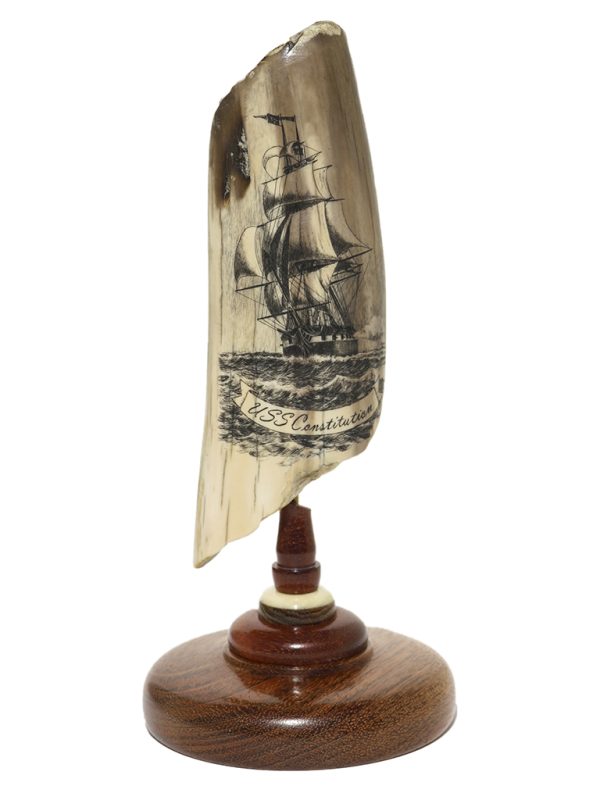
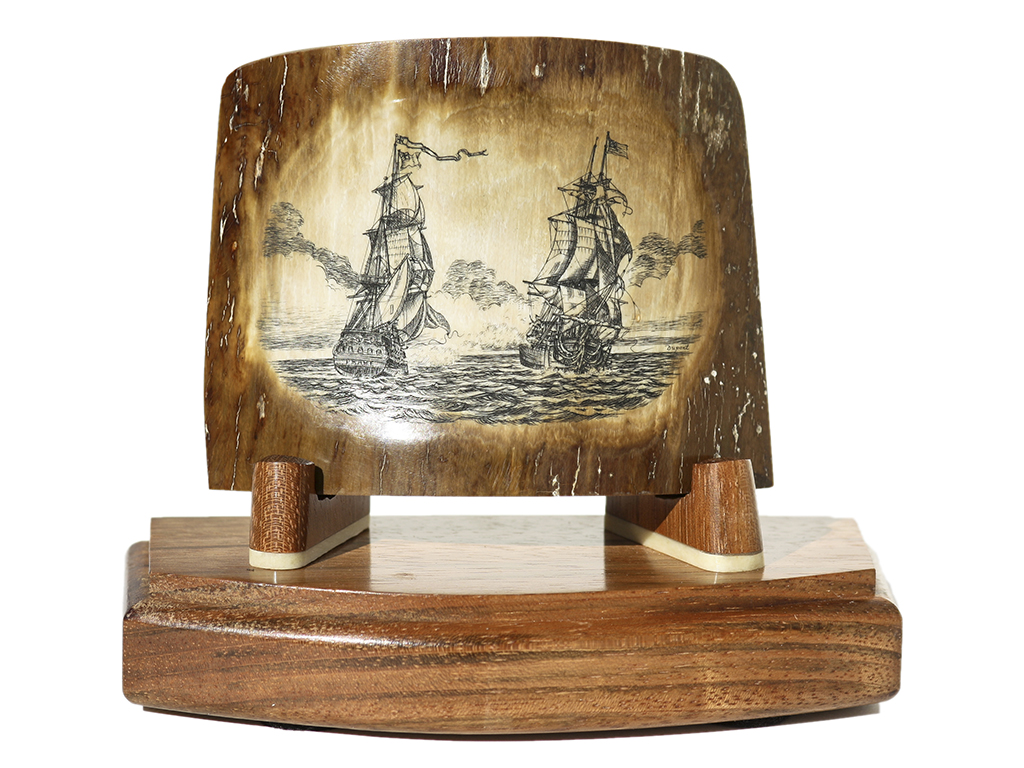
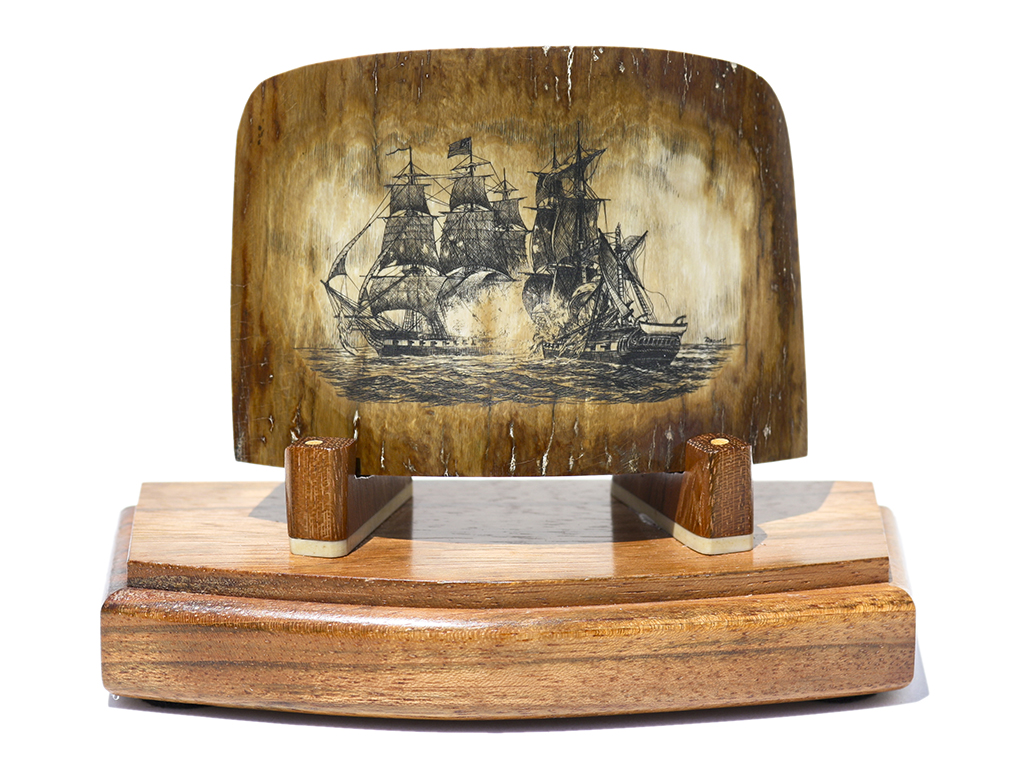
“Constitution vs. Java” black and white scrimshaw on ancient mammoth ivory bark by Gerry Dupont.

On December 29, 1812, while cruising off the coast of Brazil, USS Constitution’s masthead lookout sighted two ships on the horizon. Constitution, under the command of Commodore William Bainbridge, stood toward them, and the larger of the two, HMS Java, tacked toward the Americans.

Java, a 38-gun frigate (but mounting 47) commanded by Captain Henry Lambert, maneuvered to close with Constitution. The Americans opened fire as the range decreased, but the gun crews had difficulty hitting their target. Soon, Java ranged alongside Constitution and the battle commenced. As the two ships maneuvered to rake each other, Java suddenly turned under the American’s stern and fired. British shot smashed Constitution’s wheel and wounded or killed the four quartermasters manning it. The same broadside shattered a railing surrounding the after hatchway, embedding a shard of copper in Bainbridge’s thigh. Despite his wound, Bainbridge rallied his crew. To regain control of the ship, crew members were sent to the berth deck to steer the ship using the tiller directly connected to the rudder. The heavy American shot, coupled with the defensive properties of Constitution’s thick hull, began to turn the tide of battle. Captain Lambert decided to board the American frigate, and aimed Java’s shattered bow at Constitution. As the two ships neared, American shot toppled Java’s foremast and the boarding attempt failed. Soon after, Lambert received a mortal wound in the chest.

The Americans fired several more broadsides and then stood off out of range to repair damaged rigging. On Java, the devastation was complete with her three masts and bowsprit damaged, and many of her guns inoperable. An hour later, Constitution swept back and took up a raking position off Java’s bow. First Lieutenant Henry Ducie Chads surrendered the ship for Constitution’s second victory of the War of 1812.

After removing the British prisoners, Bainbridge determined that he could not tow Java to an American port. A demolition party lit fires in Java’s hold, causing the magazine to explode. Although Constitution suffered damage to her rig and hull, the ship made Boston on February 15, 1813. News of the victory had arrived six days before, and the city was ready to welcome its heroes. When the news reached England, the British Admiralty took steps to ensure that no more of their frigates would fall victim to the Americans. In July 1813 they issued orders forbidding their captains from engaging American frigates one on one.
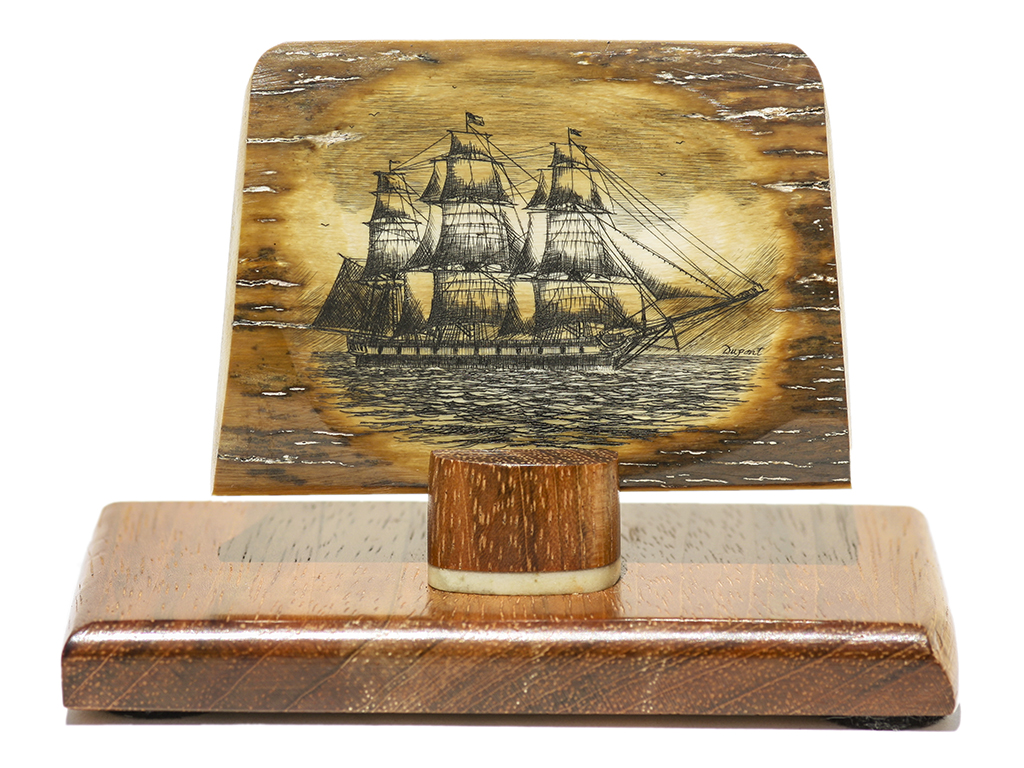
C.W. Morgan at Sea

Gerry Dupont Scrimshaw - C.W. Morgan at Sea

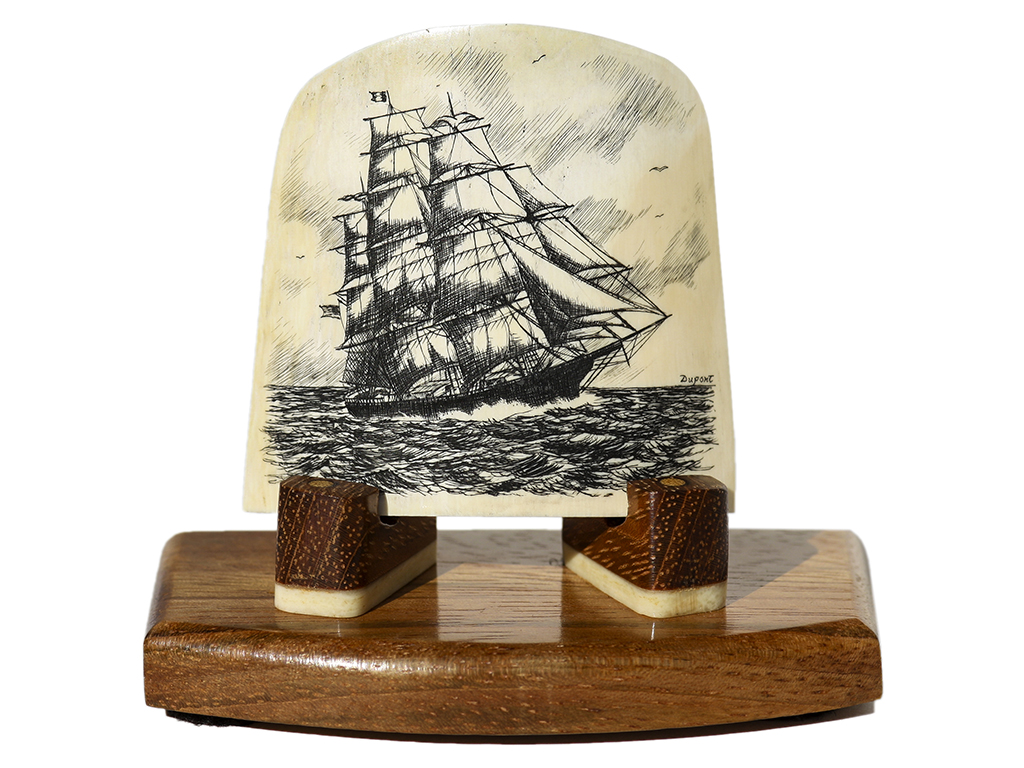
“C.W. Morgan at Sea” black and white scrimshaw on ancient mammoth ivory bark by Gerry Dupont. Fine depiction of the Charles W. Morgan by Dupont. Smooth sailing appears to be the order of the day. However, dangerous clouds appear to be closing in with darkness in the mammoth ivory creating the impression. Great work  by  one of the best in the field today. Nice stand, nice ivory and nice price.

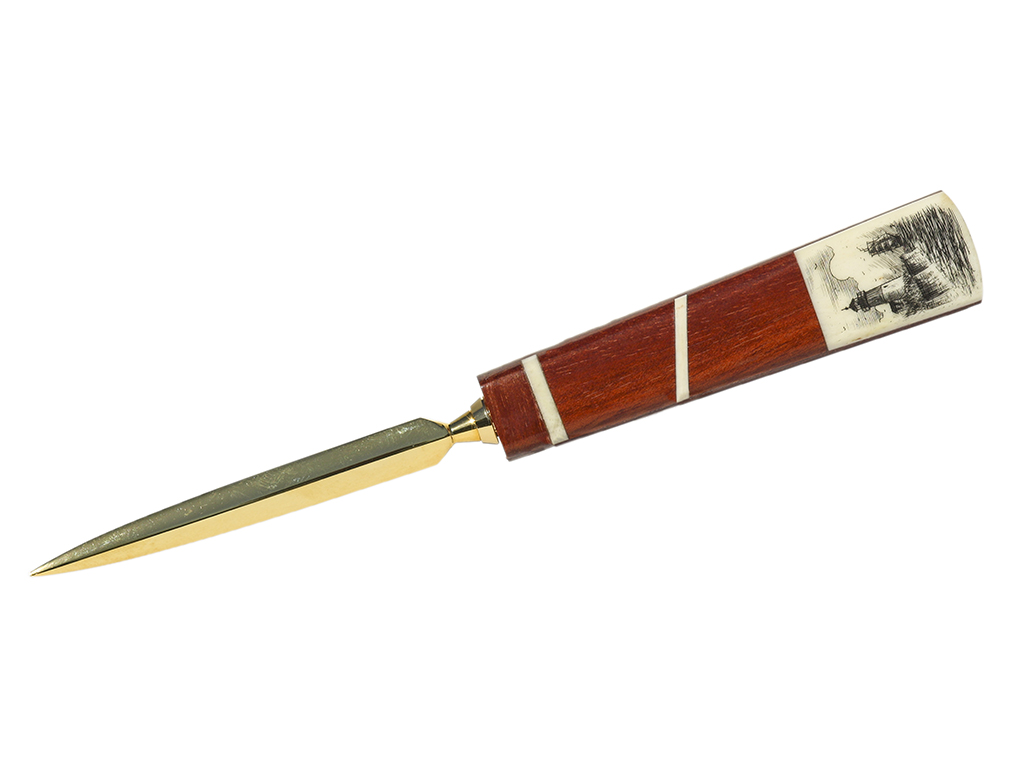
Scrimshaw Letter Opener

Gerry Dupont Scrimshaw - Scrimshaw Letter Opener

“Scrimshaw Letter Opener”  Black and white scrimshaw on ox bone by Gerry Dupont. Handsome letter opener features ox bone  inlaid into rich blood wood. Handle is 4″L. Perfect gift for anyone, especially those interested in maritime art. Because this is oxbone, not ivory, we can ship to all 50 states.

Lighthouse and Schooner

Gerry Dupont Scrimshaw - Lighthouse and Schooner

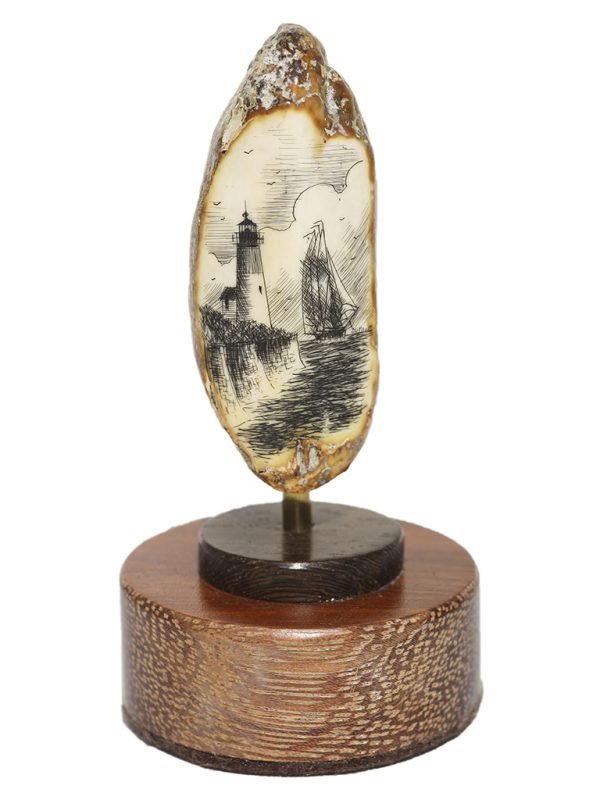
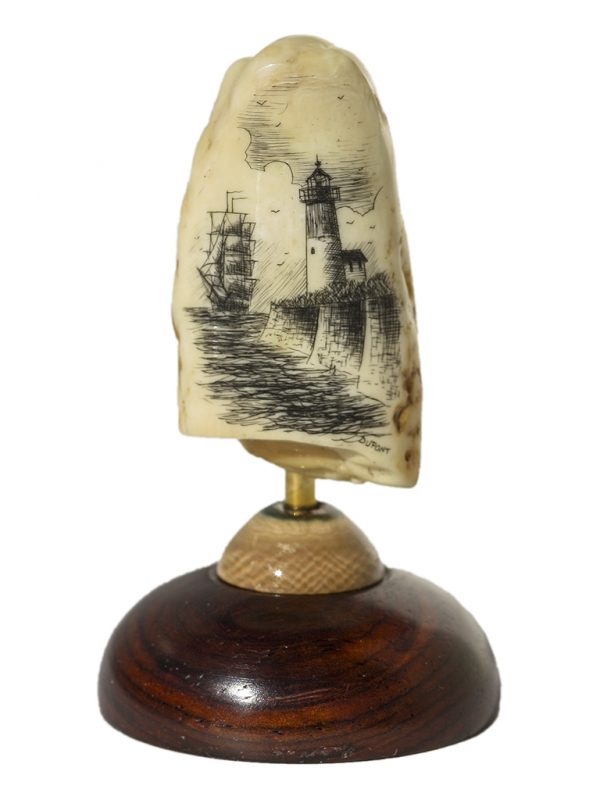
“Lighthouse and Schooner” black and white scrimshaw on ancient walrus tooth ivory by Gerry Dupont. Lighthouses guides the way for approaching schooner. Lighthouse always convey a sense of security and safety in both mariners and civilians alike. Fine work here.

Old Ironsides in Storm

Gerry Dupont Scrimshaw - Old Ironsides in Storm

“Old Ironsides in Storm” black and white scrimshaw on ancient walrus tusk ivory by Gerry Dupont. Dramatic rendering of famous warship in stormy weather. Carrying all of her sails, Old Ironsides will probably outrun the weather. Scrimshander, Dupont, has taken full advantage of the color in the walrus tusk to create the dark, gloomy atmosphere. Great  touch by one of the best. Handsome stand completes the picture.

Clipper Bound for SF

Gerry Dupont Scrimshaw - Clipper Bound for SF

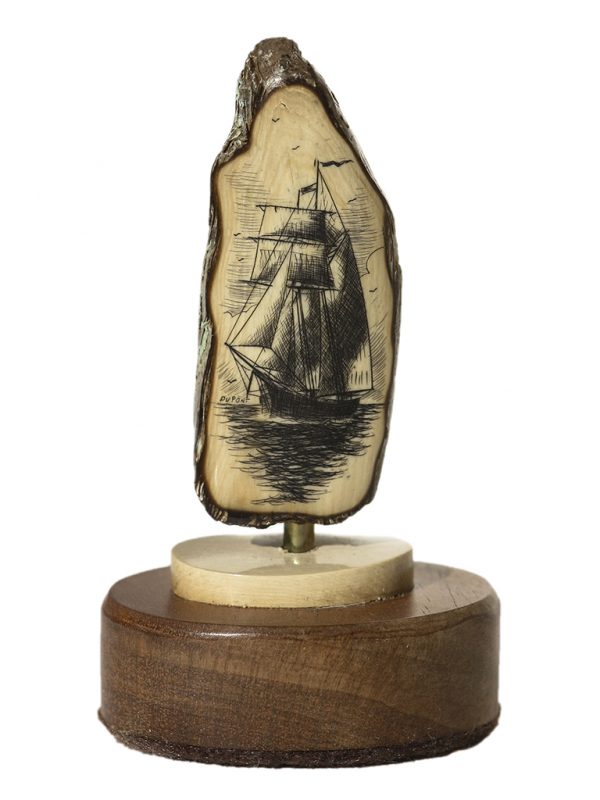
“Clipper Bound for SF” black and white scrimshaw on ancient mammoth tusk ivory bark by Gerry Dupont. Fast clipper ships were the main means of transportation from the East Coast to San Francisco and the gold fields. At one time there were over 600 abandoned vessels in San Francisco Bay as whole crews would jump ship and head to the gold fields. Nice piece of mammoth ivory and Dupont has done it justice with this gem.

Whaleship Searching

Gerry Dupont Scrimshaw - Whaleship Searching

“Whaleship Searching” black and white scrimshaw on ancient walrus tooth ivory by Gerry Dupont. Elusive whales make for a long voyage. The average whaling voyage was around three years. Long day at the office, indeed.

Brigantine all Alone

Gerry Dupont Scrimshaw - Brigantine all Alone

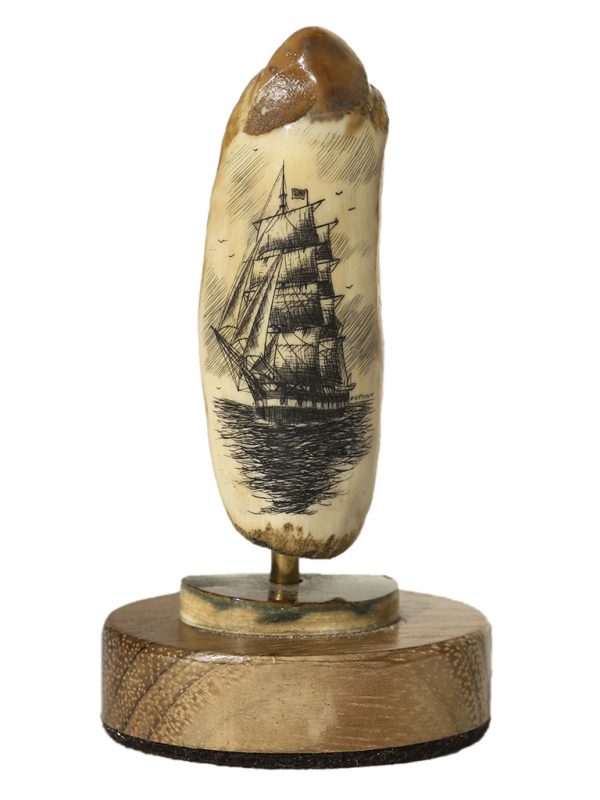
“Brigantine all Alone” black and white scrimshaw on ancient walrus tooth ivory by Gerry Dupont. Scrimshander always does his best, time after time. So much detail on these ancient walrus teeth. Fine stand with mammoth ivory caps it off.

Clipper Nearing Lighthouse

Scrimshaw Letter Opener

“Clipper Nearing Lighthouse” black and white scrimshaw on ancient walrus tooth ivory by Gerry Dupont. Clipper leaving port, heading for California during the Gold Rush. At one time, there were nearly 700 abandoned vessels in San Francisco Bay as the crew would jump ship and head for the Gold Country.

Drake vs Ranger 24 April 1778

Gerry Dupont Scrimshaw - Drake vs Ranger 24 April 1778

“Drake vs Ranger 24 April 1778” black and white scrimshaw on ancient mammoth ivory bark by Gerry Dupont. Famous battle of the Revolutionary War, as the American vessel took the war to the English shores for the first time, capturing the British man-o-war, Drake. Although the British had larger cannons, they were not as quick at loading as the Americans and soon gave up after an hour and change. Excellent work by well known scrimshander, Dupont. Note the title engraved on the top of this thick piece of mammoth ivory. Nice touch.